From financial reporter to driver of value creation
A good CFO looks beyond the numbers
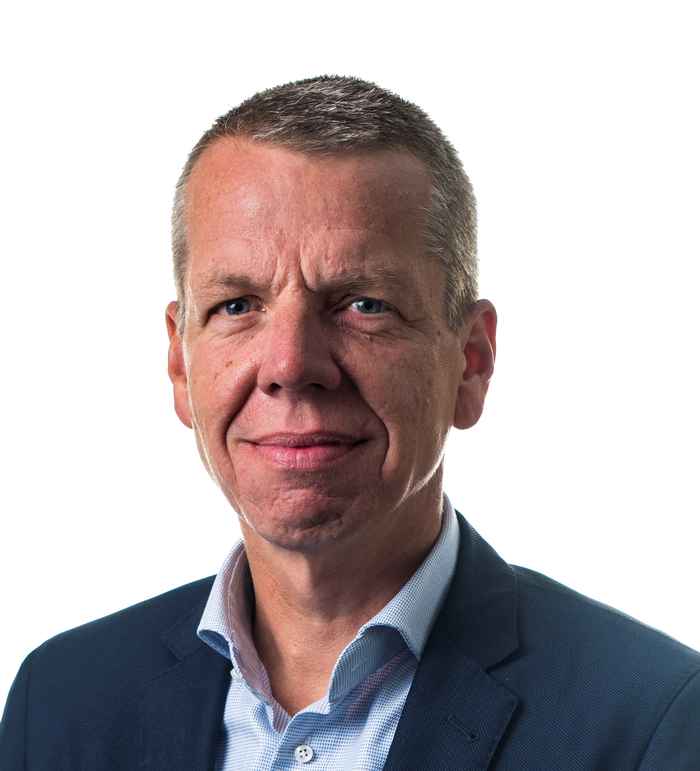
According to Lodewijk Lockefeer, no one is better positioned to draw attention to this diverse spectrum of stakeholders and returns than the CFO. Lockefeer is CFO at CoreDux, a Dutch Brainport-based high-tech hose and systems manufacturer that supplies ASML, amongst others. He is also a guest lecturer and member of the Curatorial Panel for the Executive MSc of Finance & Control at the University of Amsterdam (UvA).
What is the most important task for a CFO?
‘The CFO pinpoints and manages a company’s value creation and advises and supports management team decision‑making. Almost everything the CFO does is driven by the question whether enough value is being created to safeguard the continuity of the business. Traditionally, the CFO’s primary responsibility was financial reporting and control, but tasks such as identifying growth opportunities and mobilising staff around themes like diversity and sustainability are also important.’
Has the CFO role changed over the years?
‘In the past, shareholders were a company’s main stakeholders. Today, other stakeholders including customers, suppliers, employees and the wider community, have become more important. All of these stakeholders contribute something to the company and are entitled to see some form of return. What that is differs. It needn’t always be about money or expressed in monetary terms. Employees want to feel connected to their company, for example, and to have a positive work experience. Customers and suppliers want to know what an enterprise is doing to make the world a better place. It’s up to the CFO to focus attention on these myriad stakeholders and their returns.’
Where have you seen the effects of this diversification of stakeholders in your own career?
‘In the past, it was relatively easy for companies to stake out a strategy. Things were more predictable. That has changed. There is far more information available now, capital is much cheaper and not everyone is as keen to work for big companies any more. Organisations have to learn to think from the outside in, instead of the other way around. They have to be open to the outside world and to let it in in order to continue creating value and to remain innovative.’
Some people have proposed a shift from CFO to CVO, a chief value officer. What’s your take on this?
‘Creating value isn’t an isolated function. It’s something the whole business needs to do. Value is a business matter, not a finance matter, which is ultimately the CEO and management team’s responsibility. However, the CFO can keep a critical eye on the value being created and keep asking: are we doing the right things, are we allocating our resources the right way, are we achieving our value targets? This makes the CFO more of an adviser, challenger and steward of that value than the one responsible for it. That’s why I wouldn’t turn the CFO into a CVO. I take it more as an invitation for the CFO to become more actively involved.’
Are non‑financial values such as sustainability and diversity harder to measure than financial ones?
‘I don’t think financial departments should take ownership of non-financial KPI's. That ownership lies with the business. What we can do is help the business measure these KPI's in a consistent way. I’m also in favour of translating non-financial KPI's into financial metrics wherever possible. For instance, you can measure CO2 emissions in tonnes, but also in cost per tonne.’
Does the European sustainability reporting directive (CSRD) fall under the CFO’s responsibility?
‘Absolutely. These accounting rules for social and environmental indicators are incorporated into the annual financial statements, and the consistency and integrity of these data are the CFO’s responsibility. The challenge is to view CSRD as not purely a compliance issue, but a business opportunity. How can you turn a sustainability agenda to your advantage? This is where the CFO can align mandatory reporting with the underlying objectives and leverage them for the benefit of both the company and its wider environment.
You are a guest lecturer and member of the Curatorial Panel for the Executive MSc of Finance & Control at the UvA Amsterdam Business School. How does the programme address the CFO to CVO shift?
‘The programme is built around 4 pillars, which are data analysis, ESG (environmental, social and governance criteria for enterprise), digital transformation and leadership. At the UvA, the focus is on not only developments shaping the work itself, but also, and especially, on how professionals can shape their own role. The diversity of the student population also leads to valuable and insightful discussions.’