Successful Sustainable Finance conference
20 May 2026
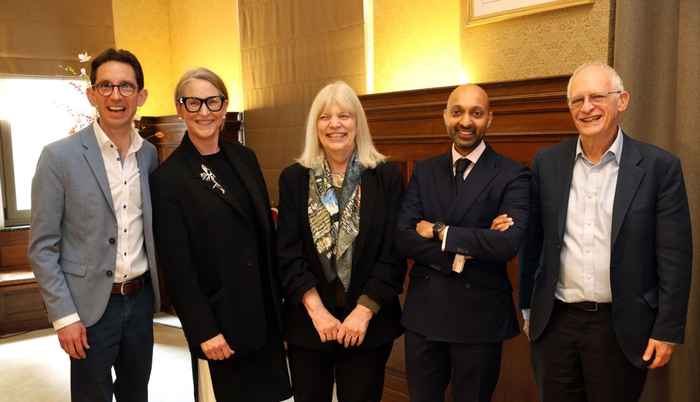
This event took place on 8 May and was organised by Amsterdam Business School professor Paul Smeets and the Research Centre for Sustainable Investments and Insurance (RCSII).
Politics, regulation and investor behaviour
In the opening keynote, speakers highlighted how the political environment shapes regulation and investor preferences. Despite political pushback, sustainable investment in Europe remains high. Even in the United States, flows into environmental funds continue to hold up.
Other research showed how moral values influence the way people judge corporate behaviour. In particular, views on high CEO pay and layoffs appear strongly related to underlying moral attitudes. This connection between ethics and perceptions of corporate decisions is an important element in understanding sustainable finance.
Climate risks are already priced in
Several contributions demonstrated that climate change is already reshaping markets. One study presented evidence that house prices in cyclone exposed areas remain substantially lower, even over the long run. Another showed that impact investments in affordable housing come at a real financial cost to non-profit organisations.
These findings underline that climate and social objectives can involve trade offs with financial returns. They also show that physical climate risks are increasingly reflected in asset prices, especially in vulnerable regions.
How much impact do sustainable products really have?
A central question during the conference was whether investors can truly create change with their values. One presentation focused on climate-themed exchange traded funds (ETFs). It showed a striking gap between perceptions and expert assessments. Retail investors believe these ETFs have far greater impact than sustainable finance scholars think they do.
This mismatch raises important questions for the design, marketing and evaluation of sustainable financial products.
Towards investor democracy
In the afternoon, Nobel laureate Oliver Hart argued for forms of deliberative democracy in finance. The idea is to give ultimate beneficiaries in pension funds and at large asset managers such as BlackRock, Vanguard and State Street a voice in how their money is invested, by letting them deliberate and choose the course of action together. Other sessions explored topics like AI and asset pricing. The event closed with a lively debate on investor democracy.