Does working from home affect employee and manager performance?
After working from home for 1,5 years, how do employees and supervisors cope? ABS researcher Sander van Triest conducted a survey in October 2021 of some 250 employee-supervisor pairs, working in a variety of positions and organisations.
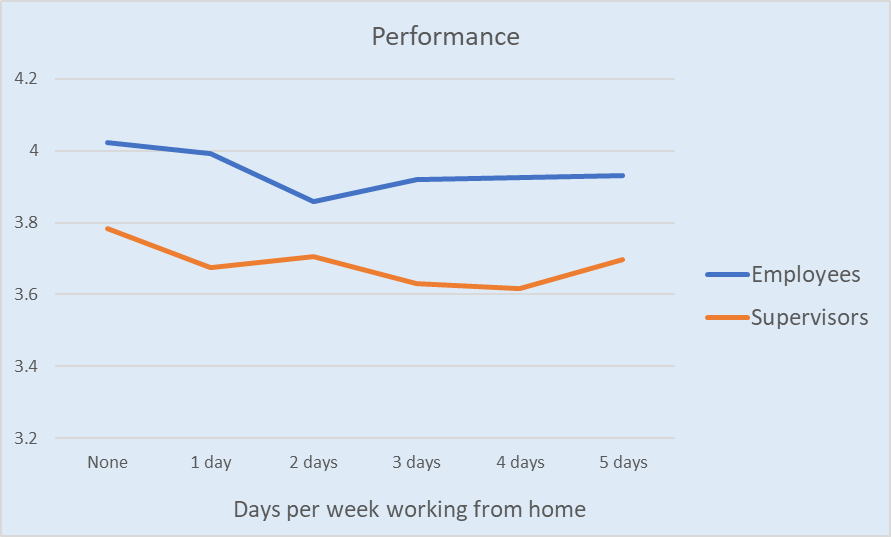
The results show that working from home has become a 'normal' characteristic of a job. On average, when working from home increases, both employees and supervisors do not report an improvement in productivity or effectiveness, nor does job satisfaction go up. But the reverse also holds: working from home does not negatively affect performance, satisfaction, or autonomy. There’s just 1 exception for supervisors performance-wise: they find it difficult to do their managerial tasks from home. However, this does not result in supervisors wanting to do away with working from home altogether
No fundamental change
In many organisations, working from home has been implemented at the start of the pandemic to enable the ‘normal’ way of working as much as possible. There may be a substantial impact for individual employees and supervisors, and there will always be jobs where it does not work, even when it is technically feasible. But the picture that emerges from this survey is that working from home is not a fundamental change in the way employees and supervisors work together. Rather, it is similar to work characteristics such as open-plan offices, flexible workplaces, flexitime, or meeting intensity. These are attributes that may make daily work life somewhat easier or somewhat more difficult, or more or less enjoyable, but which by themselves have a limited positive or negative effect on employee performance.